I Ain’t Mad at It: Clarence Alt’s Table
Clarence Alt is a man who never met a fire he didn’t want to feed, and if it can be smoked, it’s getting smoked. Armadillo eggs, chili, even chicken soup get the wood-fire treatment, with Mare at his side and a quiet “I ain’t mad at it” for a job well done.

The Brisket That Took All Night
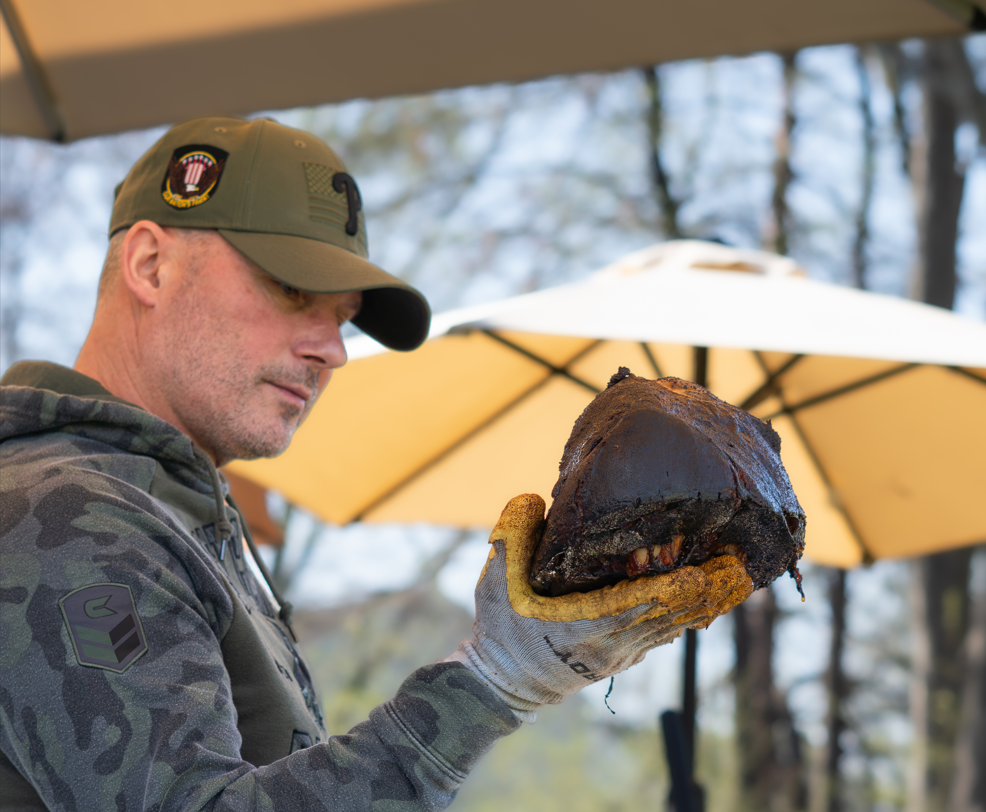
Somewhere in my mom’s camera roll is a photo of my dad, Clarence, asleep on the floor. The only obvious explanation: he was smoking a brisket.
He lit the fire around 10 o’clock on a Friday night, knowing the brisket would need a good 14 to 16 hours. His offset smoker doesn’t run itself. Every hour or so the fire would fade, the gauge would dip below 250 degrees, and he’d head back outside to feed it more wood and charcoal. That went on until about 6 o’clock Saturday evening.
“The fire will start to slowly go away…I have to go out and add more wood or add more coal to it.” -Clarence
There was no party, no holiday, no crowd waiting. “I just wanted to see if I could do it,” he says. It turned out great, and he sliced it up and handed most of it out to people, because it was way too much for one house.
A great example of how to treat a hobby you enjoy. Don’t sweat the outcome; enjoy the process, since every moment is a chance to learn something for the next smoke.
Interview Excerpt:
Quinn: And then through that whole time, because you’re giving it love and attention and you’re not sleeping because of it, what is going through your head about the expectation of how it’s actually going to taste? Are you nervous? Are you excited? Is it not worth it?
Clarence: Nah, I mean, I don’t know. I love doing weird and odd things to get something done. If it was gonna turn out right, and which it did turn out great, first of all. But I just was like, something to figure out, something to do. I wasn’t nervous. It’s my time. It’s like, whatever, if it doesn’t turn out right, I’ll figure it out and do it better next time, right? I don’t know if it was nervous, excited or anything. It was just like, this needs to be done this way, and I need to keep managing it, right? Was I nervous? No, but I knew I needed to stay on top of it.
Food Has to Hit the Dinner Table
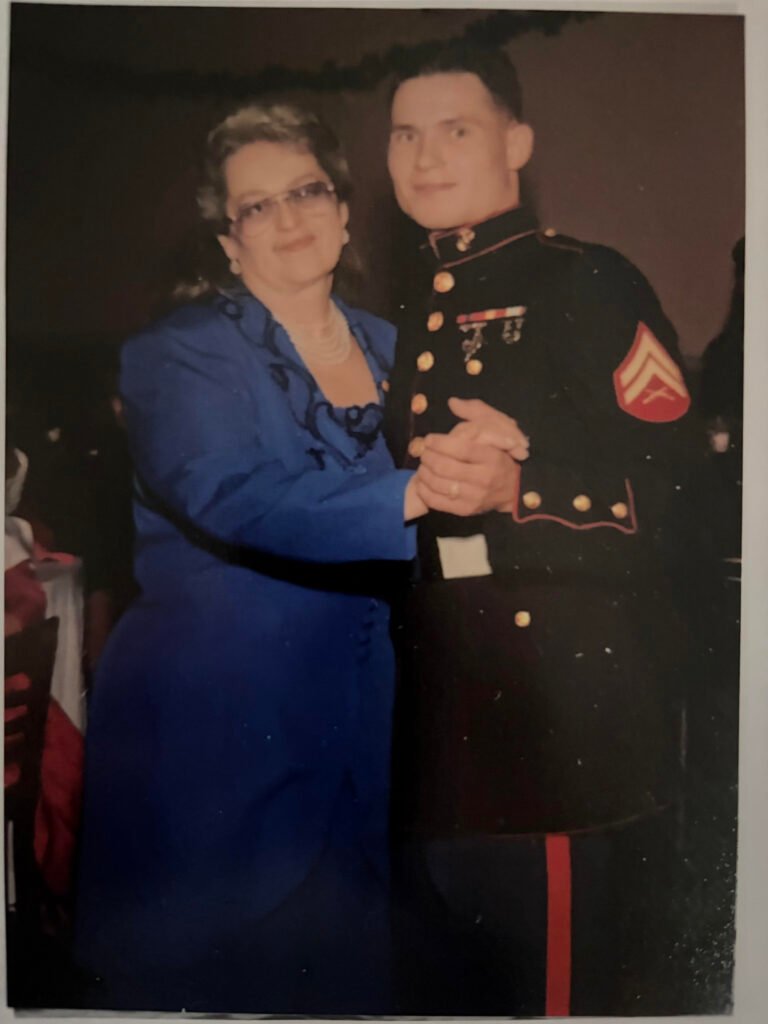
Clarence grew up in Philadelphia, Pennsylvania, in a house with a small galley kitchen and barely any counter space. His mom, Evelyn, did the cooking, and her go-tos to get food on the table were beef stew and pot roast, made in an old-school pressure cooker that never quite cooperated. It was how many busy families manage home cooking when there is little time or energy left in the day, but knowing everyone has to be fed.
What he remembers most is the sound of her fighting with that lid. “She used to fight with this pressure cooker all the time and curse at it,” he says. A Sunday stew would stretch into dinner for a few nights. “It wasn’t the greatest flavor of food. But it was food to have.”
Back then he had zero interest in cooking. Later, raising a family of his own, he cooked the way most busy parents do: “You just cook to cook.” Somewhere along the way, that changed. “You’re not a cook, you’re not a chef,” he says, “but you know you want better food.”
Interview Excerpt:
Quinn: Was there a moment, you know, growing up with the idea that food just needs to happen because we’ve got to survive, what was the transition then into cooking for enjoyment? Maybe it links back to getting into more of the grilling part. What was your transition from young kid coming home, mom has to fight the pressure cooker, to like, oh, food is fun and enjoyable?
Clarence: Um, I don’t know what the transition would have been. Granted, when I was a kid, it was just what it was, just prepared food. And then I went off and did my own thing, I guess. When you’re talking about bringing up a family and stuff like that, you just cook to cook, right? But then later on, you wanted better food. I guess the transition was, okay, I bought a grill. Okay, this grill isn’t working, buy another grill, right? And getting to a point where, well, the first few times I did it, it wasn’t great. It was edible, but we ate it. And then it gets to the point where, okay, what do I do next time to make it better? Do I make it slower? Do I make it hotter? Okay, this type of meat reacts different at this temperature, that kind of stuff. And then the transition becomes, you understand what you need to put on the meat and also how to cook it. So I don’t know if it’s a transition. It’s, you know, years of doing it by trial and error. When you know you’re not a cook, you’re not a chef, but you know you want better food.
“Hell, I Know I Could Do That”
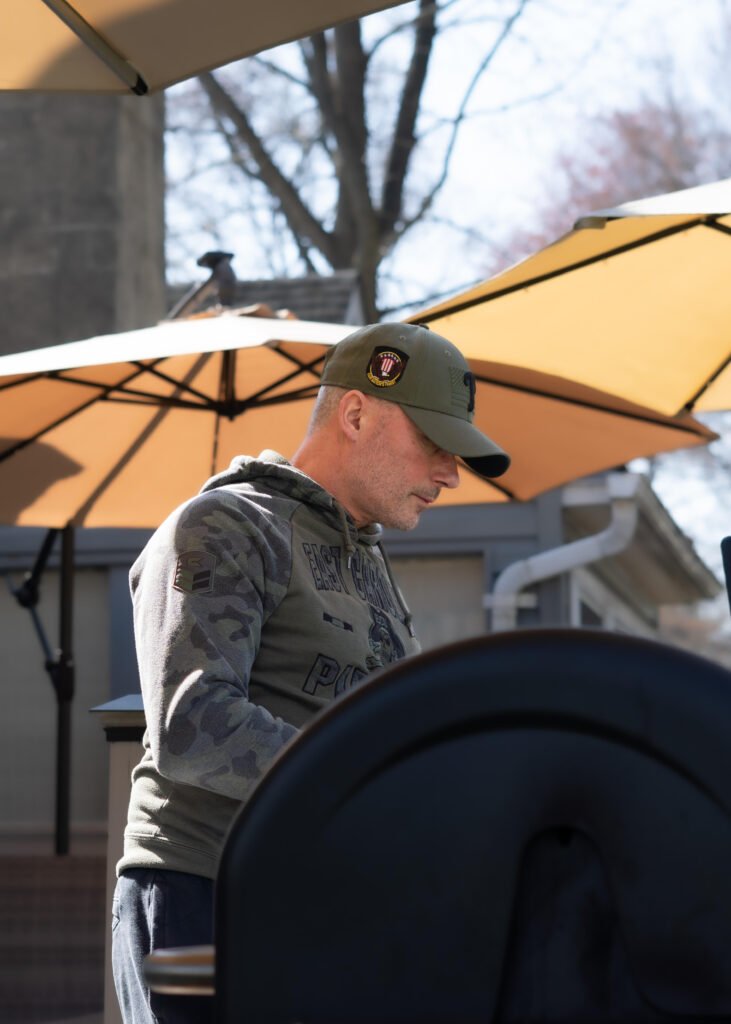
Clarence has always been the guy at the grill. Smoking came later, around 2021, thanks to Bill down the street. Bill bought a smoker, loaded it with charcoal, and started turning out slow-cooked meat. Clarence’s reaction: “Hell, I know I could do that.” So he bought one too.
The first cook didn’t go well. Too hot, too dry. With an offset smoker, he had to learn where to build the fire and how much of it to feed so the heat landed where the meat was. “It was just trial and error,” he says.
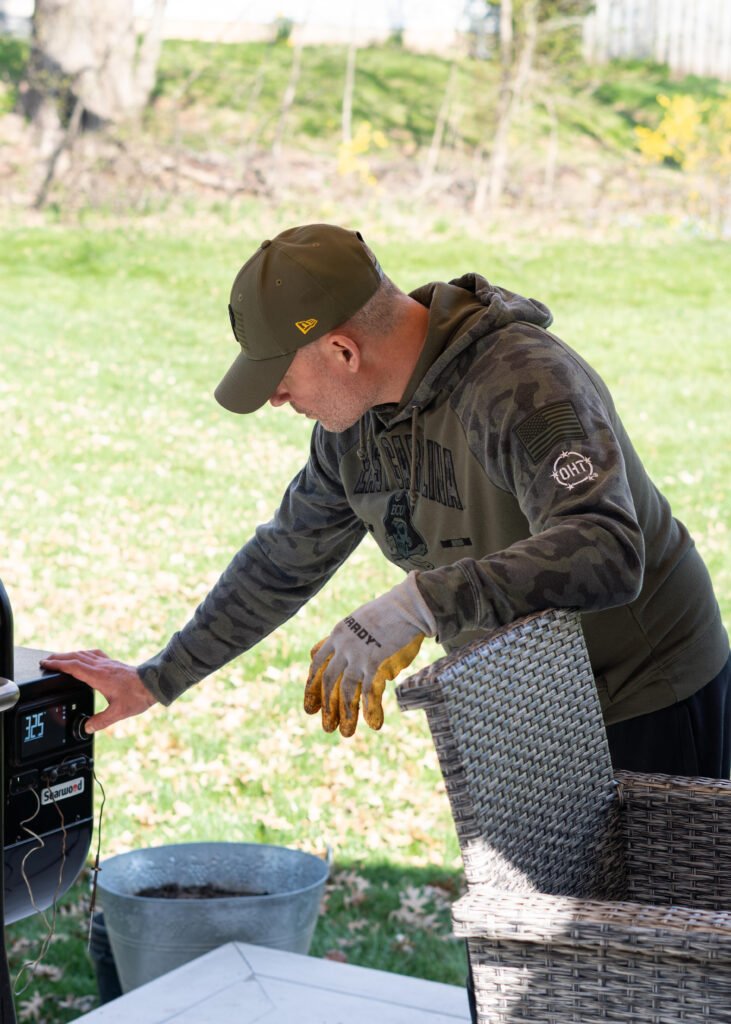
His first rig was a propane combo he never loved, so he did his homework and replaced it with a Weber pellet grill, which burns wood pellets instead of propane. It can smoke low or crank up to 600 degrees. These days the offset handles the big cuts and the Weber handles everything else.
Having a versatile piece of equipment allows him to express his creativity through his craft. One of his own tricks: he’ll smoke a steak at 180 degrees for 10 or 15 minutes, set in a pan away from direct heat, then pull it, crank the grill, and sear it. Some of these ideas he can attribute to watching cooking shows where, under pressure the players, come up with unique ways to impart flavors or use alternate ingredients you would not have anticipated.
Interview Excerpt:
Quinn: I feel like you’re a very research-driven type of person. What went into the decision on getting this new Weber pellet smoker?
Clarence: The decision was to have both the smoking aspect and the grilling aspect. Some of the pellet grills you buy at the big stores like Lowe’s and Home Depot, they’ll only smoke, right? With this Weber, I found out doing the research that you can crank it up to 600 degrees and you can also use it to grill. You can take a steak and flash grill it. And it’s great for, I’ll cold smoke a steak before I grill it. I’ll put it at 180 degrees for like 10, 15 minutes to get that cold smoke, and I’ll put it in with a pan so it’s not getting direct heat, it’s just getting smoke. Then I’ll take out the steak and crank up the heat on the grill, so then I’ll grill the steak after. I believe it gives it a better flavor combination with the smoke and the grilling.
Time, Temperature, and “I Ain’t Mad at It”
If a recipe says something takes six hours, Clarence doesn’t care. “I temperature cook everything,” he says. If a brisket has been on for twelve and a half hours and hasn’t hit his 185 to 190 degrees, it stays on. Same with a steak on the grill.
That’s how a fully cooked ham that was supposed to take six or seven hours took ten to twelve instead. It was close to midnight before it went into the braising pan, and then it needed two more hours there.
He doesn’t sweat it. Not the ham, not the all-night brisket, not even a $120 cut of meat. “If I screw it up, okay,” he says. “It’s still going to be edible, and I’ll figure out how to do it better next time.” He’s never ruined a piece of meat because of the smoker. He has had fires get too hot, too cold, or pour out thick white smoke when you want a thin, almost blue wisp. He’s made a chuck roast that came out “dry as hell.” He ate it anyway.
That’s where his new favorite phrase comes in. He picked up “I ain’t mad at it” from Matt Pittman of Meat Church, and he uses it for everything, whether a dish came out perfect or just okay. His definition is simple: “If you’re mad at it, you’re throwing it out. I ain’t mad at it. I’ll eat it.”
Interview Excerpt:
Quinn: I have a question centered around what a day of smoking looks like. You’ve had some experiences where the smoking time went way longer than you anticipated, and it went longer into the night than what was planned. Do you have fun stories about that?
Clarence: I mean, all of them. I temperature cook. If someone says, oh, it’ll take 6 hours to do something, or it should take this, I don’t go by that. I temperature cook everything, right? That’s why you have your thermometers, to get a quick reading on things. If a brisket’s been in for 12.5 hours and it still hasn’t reached my 185 to 190 degrees, then it goes back in, and it goes longer, right? Nothing’s by time when you’re talking that kind of stuff. Even when I cook steaks on a grill, I temperature cook my steaks. I’ll flash grill them, get them nice grill marks and stuff like that, but if it’s not to the temp that I want, then I put it up on the higher racks and wait until it gets to that temp, right?
Two Cloves Means Six
Clarence learned to cook the way a lot of us did: by watching and by trial and error. He remembers Bobby Flay on Grillin’ & Chillin’ before cooking shows were everywhere, and Emeril Lagasse after that. These days it’s competition shows like Tournament of Champions, where chefs grab gochujang, kimchi, or fish sauce and build something on the fly. “There’s interesting ideas where you’re like, wow, I never thought of that,” he says.
These days a go-to source for new ideas is Matt Pittman of Meat Church. My mom found the channel, and he went deep. He was already a few years into smoking by then, and what hooked him was range. Other pitmasters he followed usually only did big cuts like brisket and pork shoulder. Pittman smokes tomatoes, onions, and jalapeños for salsa, does smoked chicken with Alabama white sauce, and starts birria on the smoker before finishing it in a Dutch oven. “It’s not just all smoke,” Clarence says.
But he rarely follows anyone to the letter. “You don’t always have to follow a recipe,” he says. “They say put in two cloves of garlic, and I’m putting six in.” He does draw a line, though: just because he can handle double the black pepper doesn’t mean everyone at the table can.
Interview Excerpt:
Quinn: Growing up, we always watched cooking shows. Are there any that were inspiring to you through the years, that got you more interested in cooking? Because you always give really good examples of, oh, I noticed how these people on these shows did this one particular thing, and I tried it on my equipment.
Clarence: Yeah, just watching all the shows. I remember back, I don’t even know if you were born yet, watching Bobby Flay on Grillin’ and Chillin’, before cooking shows were even popular. It’s cool, because I’ve always grilled. I remember the shows with Emeril Lagasse and stuff like that, and just getting weird ideas. I always felt like, yeah, I could be a recipe cook, but I always feel like I can add more or do something different. Add a little bit of this and a little of that, right? You don’t always have to follow a recipe. They say put in 2 cloves of garlic, and I’m putting 6 in. But you also don’t want to go, it says a tablespoon of pepper, and I’m going to do 2 tablespoons. I can handle it, but somebody else can’t, right?
Running the Kitchen
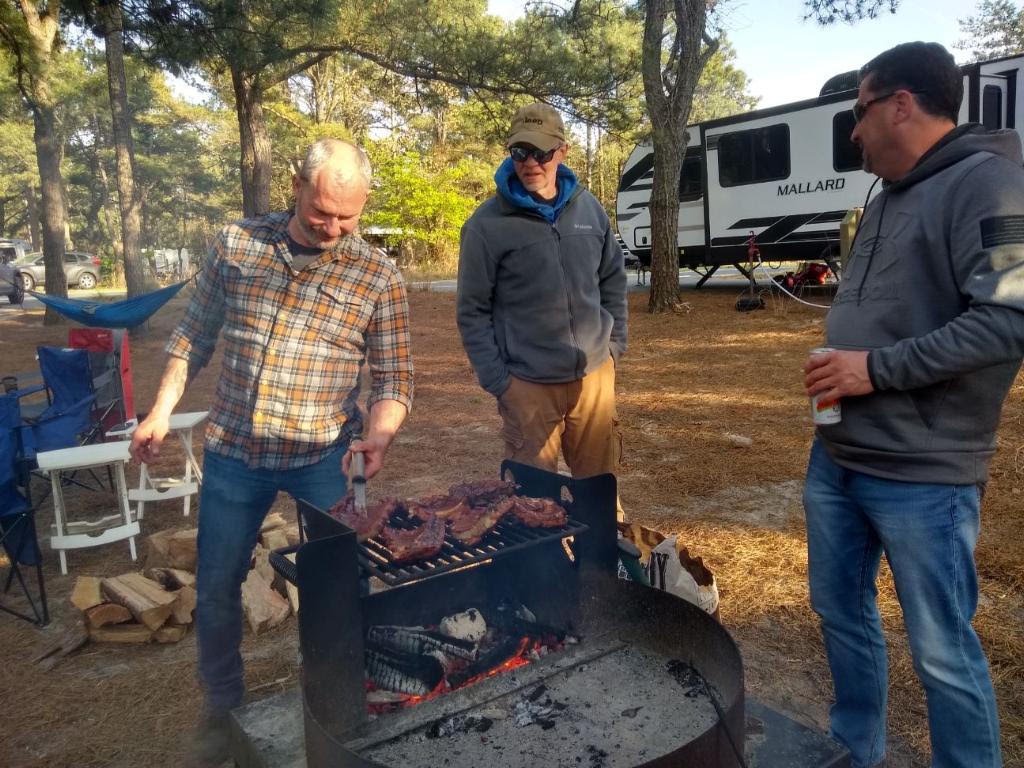
For years, Clarence was the grill master and my mom ran the kitchen. Lately he’s taken over inside too. He works from home, wraps up around 4 or 4:30, and is ready to do something with his hands, whether that’s the yard, the house, or dinner. “When I have control, I have control of taste and flavor,” he says.
The system is loose by design. My mom heads to the store unsure what to buy, and his answer is always the same: “Just get a bunch of stuff, and we’ll figure it out.” Ground beef, chicken thighs, pork chops, maybe a steak, whatever vegetables look good. Some weeks he’ll request beefsteak tomatoes to stuff, or stuffed peppers, or the stuffed squash my mom loves. It’s grilled food in spring and summer and anything soupy or stewy in fall and winter, nearly all of it from scratch. When they cook together, they trade off: one takes the main dish, the other handles the prep.
Interview Excerpt:
Quinn: Are you starting to think about the foods you want to cook during the week, or are you being handed a list of ingredients and getting into action?
Clarence: It’s more or less, Mare goes to the store and she’s like, I don’t know what to get. I’m like, all right, just get a bunch of stuff, and I’ll come up with something and we’ll just cook it. We’ll figure it out. Ground beef, chicken thighs, some pork chops, maybe a steak, different things, and just make stuff. Every once in a while I request, hey, get me a bunch of beefsteak tomatoes, and I’ll make stuffed beefsteak tomatoes. Or, you want to do stuffed peppers, we’ll do stuffed peppers. Mare really likes the stuffed squash, so we’ll do stuffed squash. It depends on the week. Whatever we have for meat and whatever we have for vegetables, we’ll throw it together and come up with something.
Quinn: And it’s always clean and healthy these days.
Clarence: Yeah, vegetables and homemade, from scratch. Other than crushed tomatoes and San Marzano tomatoes, we’re not pulling stuff out of a can and just heating it. Usually we’re cooking from scratch, from a vegetable and from a meat that’s out of a package, like ground beef or a fresh-cut steak.
The Smoker Isn’t for Everyone (and That’s Okay)
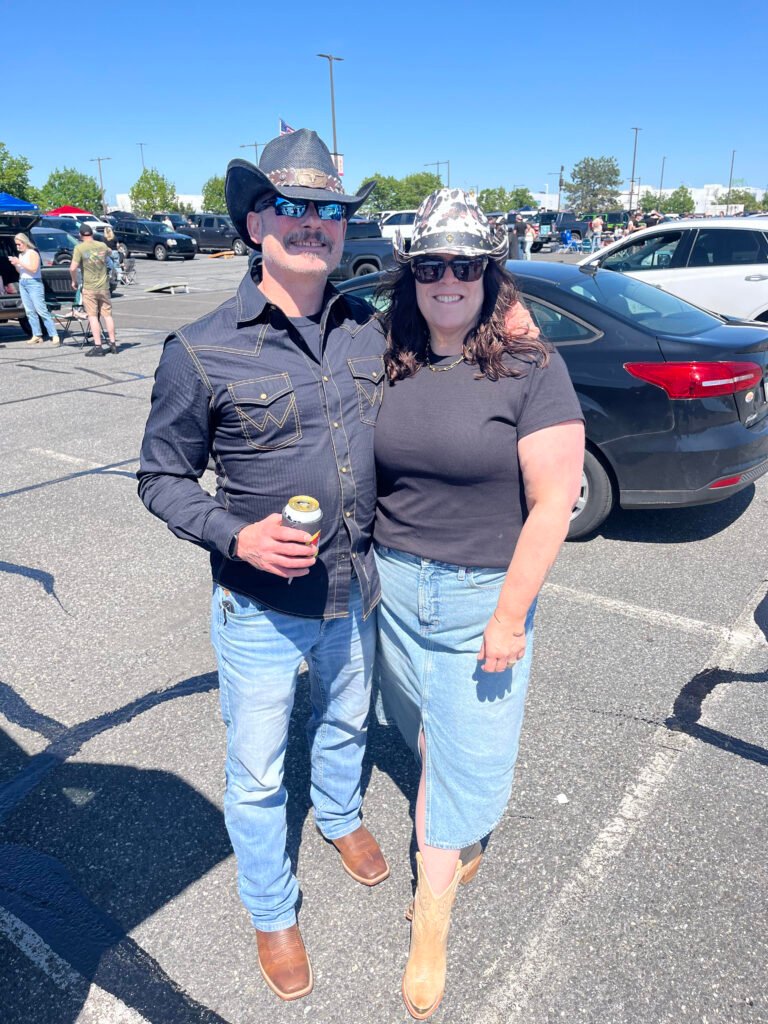
Ask Clarence whether someone should buy a smoker, and you won’t get a sales pitch. “If you’re not willing to put the time in to manage it, don’t do it,” he says. Even his pellet grill gets watched. “If you want to set it and forget it, smoking is not for you.” Rigging a gas grill with wood chips is, in his view, probably even more work. “Smoking is not for the faint of heart. You have to manage the time and temperature.”
Interview Excerpt:
Quinn: I guess kind of my last question about the smoker. If someone is on the edge of making a smoker purchase, what do you say to them to make them do it?
Clarence: Hmm. On the edge.
Quinn: Yeah, like they’re like, oh, I’ve been thinking about it, but I don’t know.
Clarence: I think I would say, if you’re not willing to put the time in to manage it, don’t do it.
Quinn: That’s the reverse of what I was thinking, but.
Clarence: If you’re just doing it because it’s kind of cool and you want to get smoked stuff, but you just want to let it go. Even with the pellet grill, I manage the pellet grill. It’s not just set it and forget it, because you can [mess] up your meat. I can’t just sit there and say, oh, in 4 hours it’s done. No. If you’re not going to manage your smoking, don’t do it.
Quinn: So you’re on the side of, it’s work, and you’ve got to be committed.
Clarence: Yeah. If you want to set it and forget it, smoking is not for you.
What’s on Clarence’s Table:
Beef Bourguignon
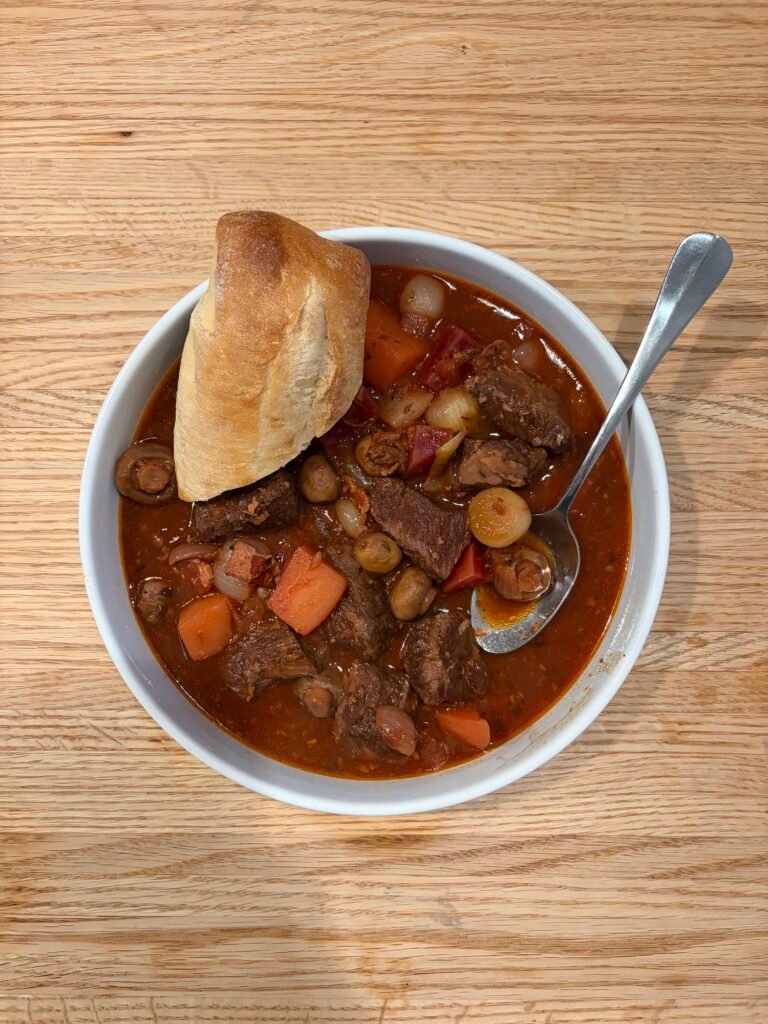
This one comes full circle from his mom’s pressure cooker. He seasons and sears the beef in a modern pressure cooker, sautés the vegetables, deglazes with red wine, then adds beef broth and lets it go for about an hour. The result is dark, glossy, and rich with red wine. He goes heavier on seasoning and garlic than any recipe asks, of course.
It’s a Sunday dinner that carries through the week, and they’ve made it ahead for camping trips to reheat over the fire for the whole group. “It’s great when you first eat it,” he says, “and it’s even better reheated.” Serve it with egg noodles, or, his pick, garlic mashed potatoes with rosemary, thyme, and chives.
Chicken Soup
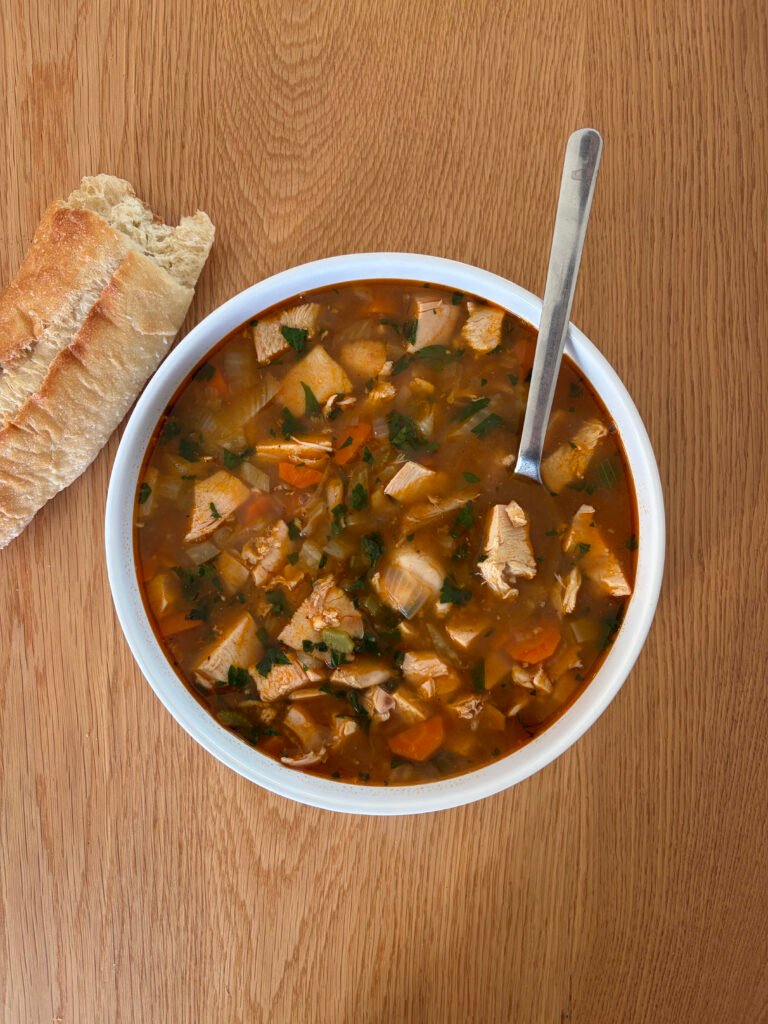
This soup started with leftovers. Whenever Clarence spatchcocks a chicken for the smoker, he saves the backbone. Once he has enough, he makes stock with the bones, onion, carrot, garlic, peppercorns, and the celery heart and leaves most people toss out. “I don’t even look it up anymore,” he says. From there it’s sautéed onions, garlic, carrots, and celery, the homemade stock, smoked chicken, and plenty of fresh herbs like sage, thyme, and rosemary.
Hard-won lesson: keep the noodles or rice on the side and add them to each bowl. Otherwise, it’s whatever you want in it. “It could be the whole kitchen sink.” He’s already made one batch this fall and assumes he will have two or three more before spring. My mom calls it “a bowl of goodness.”
Over-the-Top Chili
This one starts with Matt Pittman’s Meat Church recipe, and the method is the fun part. Clarence builds the chili base in a cast-iron Dutch oven: onions, green peppers, tomato paste, chipotles in adobo, and tomatoes. The pot goes into the smoker. Then a seasoned ball of ground beef and pork, two to three pounds, goes on the rack right above it. For two to three hours, the meat builds a smoky crust while its drippings fall straight into the chili below.
Clarence’s signature is the tomatoes. Instead of crushed, they use San Marzanos for big, juicy chunks. It’s smoky and rich, with enough heat to enjoy but not so much that the rest of the family taps out. He serves it hot with cheddar, green onions, and sour cream, all fall and winter. “It’s one of my favorite chilies,” he says.
Smoked Chuck Roast
This is the workhorse of the fridge. He seasons a chuck roast with salt, pepper, and barbecue rub, smokes it low until it hits about 175 to 180 degrees, then sets it in a pan with beef broth and a splash of orange or pineapple juice. It goes back on until it reaches about 210 degrees and shreds easily. Four pounds of juicy barbecue beef means sandwiches all week, or a hungry crowd fed. He’s made it three or four times just this past year, and when a chuck roast was meant for beef stew recently, he admits he just wanted to throw it in the smoker.
Armadillo Eggs
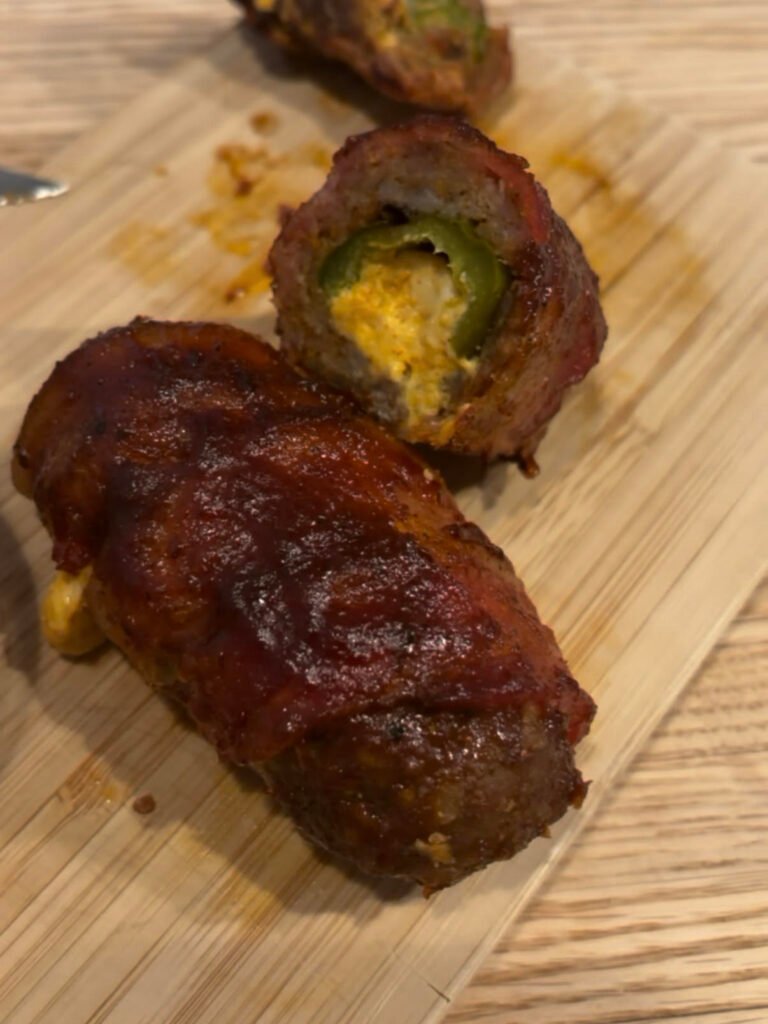
These are a party food, plain and simple. A jalapeño gets stuffed with smoked cream cheese, wrapped in breakfast sausage, wrapped again in bacon, seasoned, and smoked for two hours or so. One pound of sausage makes about four. “They’re not hard,” he says, “but they are a bit of a process.” They’re so rich that a couple of slices does it, which is why he only makes them when people are coming over. Salty, smoky, sweet, spicy, and creamy, served with his homemade barbecue sauce for dipping. Friends have started asking for them by name.
How The Alt Table Brings You the Recipes
Clarence cooks over fire. I cooked in the Dutch oven, so every recipe takes the flavor of his dish and makes it work in a regular kitchen.
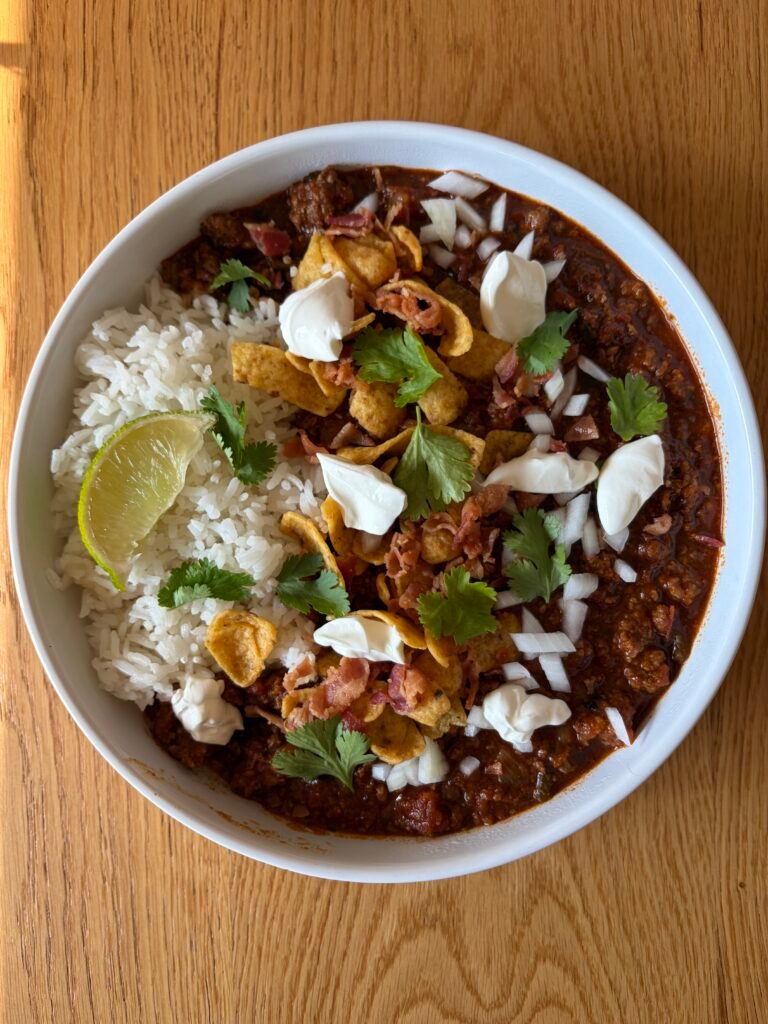
Smoky Chili with Beef, Sausage & Bacon: Crispy bacon, browned beef and sausage, poblanos, and chipotles in adobo build the smoke. Hand-crushed San Marzanos keep Clarence’s signature chunky tomatoes. It’s mild enough for the whole family and even better the next day.
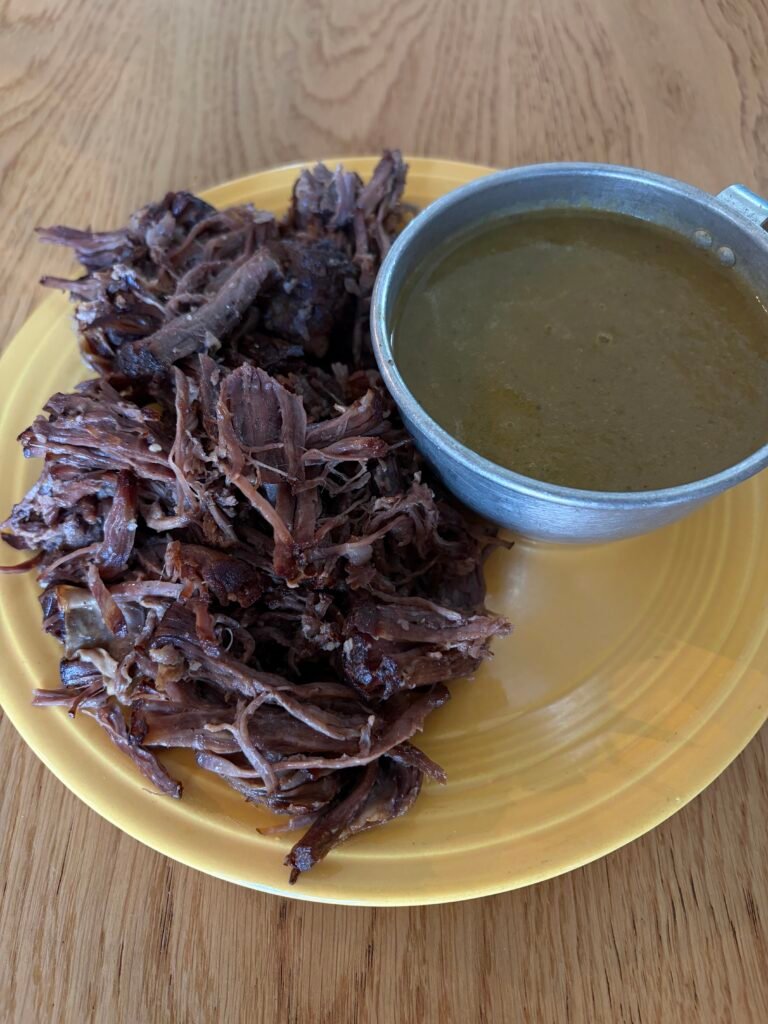
Orange-Braised Chuck Roast: A dry-brined, hard-seared chuck roast braises low and slow with fresh orange juice, poblanos, and garlic. The braising liquid gets blended into a silky sauce and stirred back into the shredded beef, so it’s ready for tacos, sandwiches, or mashed potatoes.
Smoky Roasted Chicken & Fennel Soup: There’s no smoker, but smoked paprika goes on the chickens, into the stock, and into the soup base. Charred onion, garlic, and fennel make a deep homemade stock, and fresh herbs and fennel fronds finish it.
Dutch Oven Beef Stew with Red Wine & Pancetta: My dressed-up, Bourguignon-style tribute to his stew. Chuck is seared in pancetta fat and braised in Pinot Noir with fennel and thyme until fork-tender. Beets, gold potatoes, mushrooms, and pearl onions round it out.
Subscriber bonus: An oven-baked version of his armadillo eggs, with all the jalapeño, sausage, and bacon goodness and no smoker required.
This Month’s Menu:
- Dutch Oven Beef Stew with Red Wine and Pancetta
- Smoky Roasted Chicken and Fennel Soup
- Smoky Chili with Beef, Sausage & Bacon
- Orange Braised Beef Chuck Roast
- Smoky Oven Baked Armadillo Eggs (BONUS RECIPE)
[Subscribe to The Alt Table newsletter] to get the bonus recipe straight to your inbox, plus next month’s Featured Table before anyone else.
About the Bonus Recipe
Every Featured Table comes with one extra recipe that never appears on the site. It goes only to newsletter subscribers.
Each month, one story from our guest’s table doesn’t make it into the article. Maybe it’s a dish a grandparent made only once a year, a late-night meal from a first apartment, or a recipe everyone asked for but no one ever wrote down. I save that story for the newsletter, develop a recipe around it, and send both straight to subscribers’ inboxes. It’s the part of each feature you won’t find anywhere else.
Since this month’s table is my own, I’m skipping the bonus this time around. But starting next month, every Featured Table will have one, and I’ll give you a hint about it right here at the end of each article.
[Subscribe to The Alt Table newsletter] so you don’t miss the first bonus recipe or next month’s Featured Table.
Next Month at The Alt Table
Next month, we’re pulling up a chair at Tatum’s table, and it’s a lively one. Tatum grew up in Wisconsin with her parents and two brothers, in a home where music was always playing (Norah Jones, Led Zeppelin, Dolly, or the soundtrack to whatever musical the family had just watched). Her mom was usually at the stove, the kids set the table, and everyone had a designated seat. Hers was across from her brother Henry, the perfect spot for trading ridiculous faces. The fun didn’t stop after dinner was done: Dad washed dishes, the kids dried them, and the whole kitchen sang and performed silly dances. Even her dad’s legendary “hamdogs” and ever-evolving “pottage” crockpot (raw egg and all) earned a place in the family lore.
Today, Tatum is surrounded by an incredible circle of family and friends. Food is the thread that ties them together, from holiday noodles cut thin by a whole crowd armed with knives, to build-your-own spring rolls, to campfire dinners with live music. Come meet Tatum, and stay for the stories, the recipes they inspired, and a table with room for everyone.